-
 Swiss-Polish Applied Research Programme
Seeking proposals for joint applied research projects between Poland and Switzerland.
Launch of Call 1: 22 April 2024
Closing date for submission: 1 July 2024
More Information... -
 TechMakers Brazil – Swiss bilateral Call 2024
The innovation promotion agency of Brazil (Empresa Brasileira de Pesquisa e Inovação Industrial – EMBRAPII) with the support of ApexBrasil and the Swiss Innovation Agency (Innosuisse) are announcing the 5th edition of the TechMakers Brazil-Switzerland joint call to fund science-based innovation projects between Switzerland and Brazil.
26 February - 30 September 2024
More Information... -
 2024 bilateral call between South Korea and Switzerland is open
Seeking funding opportunity for joint Innovation projects between South Korea and Switzerland. The Korea Institute for Advancement of Technology (KIAT) and the Swiss Innovation Agency (Innosuisse) are happy to announce their collaboration for 2024 to fund joint innovation projects between Switzerland and South Korea.
7 February 2024 - 24 May 2024
More Information... -
 Find partners for UK – Switzerland Bilateral: Collaborative R&D
This year Innosuisse contributes to direct project costs of Swiss companies. For more details please check the call guidelines available on the matchmaking platform.
Publication of the call
17 Jan 2024
Call briefing webinar
29 Jan 2024
Opening date for submission
05 Feb 2024
Closing date for submission
01 May 2024
Notification of decision
09 Aug 2024
Earliest project start date
01 Nov 2024
More Information... -
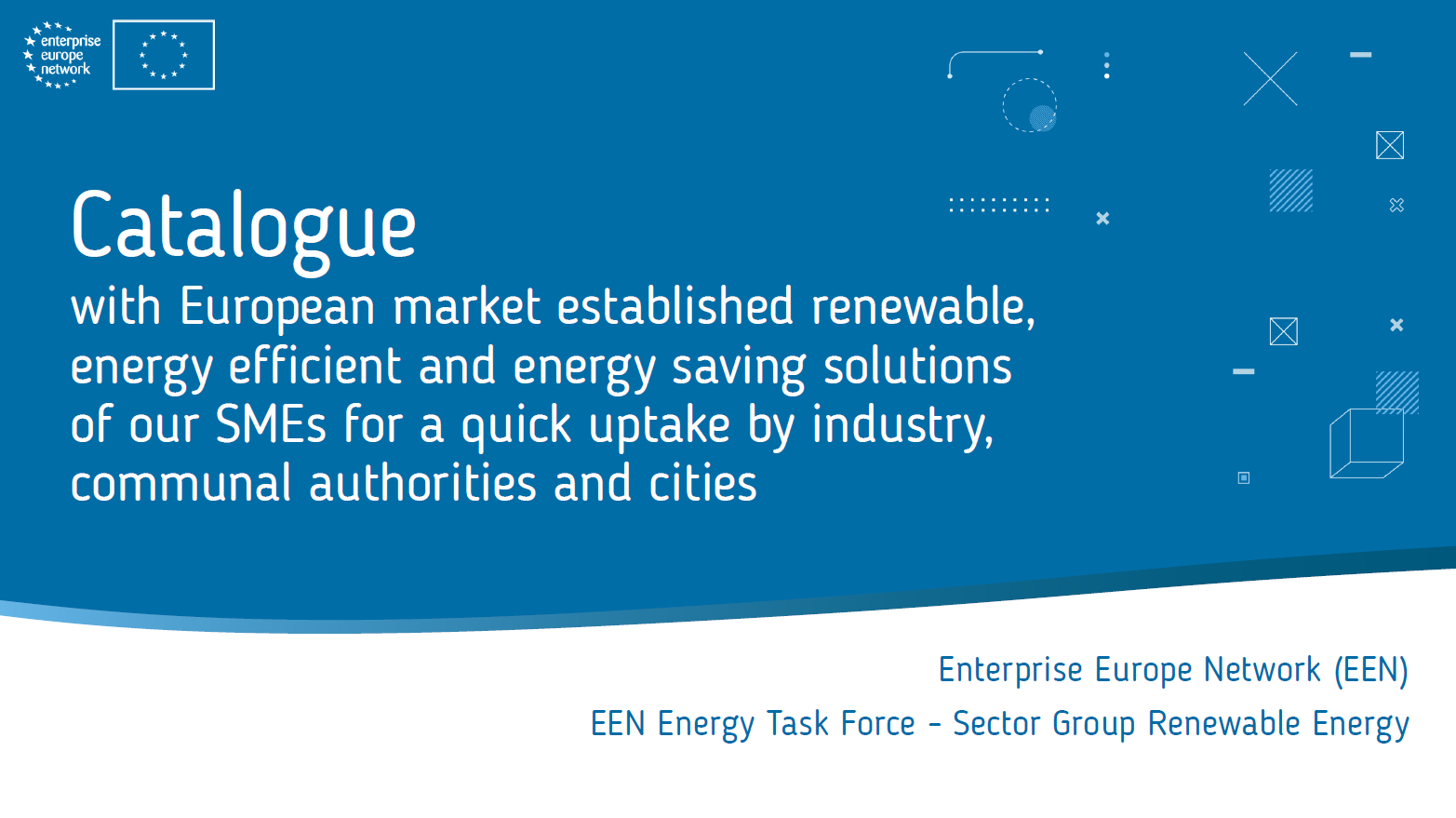 Looking for solutions to save energy, make use of renewable energy sources and lower your carbon footprint?
To address the EU wide energy crisis and offer solutions for the necessary energy transformation, the Enterprise Europe Network (EEN) Energy Task Force - including EEN Switzerland - and the group of experts working on Renewable Energy have collected around 70 profiles of energy efficient and energy saving solutions from small- and medium-sized enterprises (SMEs) across Europe.
More Information... -
 Joint Innovation with Singapore - Partner Matching Platform
In cooperation with leading innovation partners, Enterprise Singapore is hosting a virtual partner matching platform targeted at fostering international cooperations. Create your profile and schedule meetings with interesting companies from Europe and Asia.
Register now to find your next research collaboration partner or to generate exciting new business leads.
Platform runs until 31st. December 2024.
More Information...
-

"With the EEN network, we were able to find international companies and business partners ..."
R. Brechbühl, Project Leader
Topakustik AG -
-

"The team at EEN are proactive in developing ..."
C. Brandon, Co-Founder & Director
EH Group Engineering AG -
-
-

"In the EEN database, we identified a very interesting business opportunity ..."
Dr. D. Fitzgerald, CEO
Geneva Biotech -

"EEN events are very useful for exchanging ideas and meeting partners ..."
Dr. K. Udert, Research Group Leader
Eawag -

"The EEN offers quick access to the European market. Our technology offer ..."
Christian Fischer, Co-CEO
Bcomp Ltd.